
Dominos Game Classic Dominoes
FIOGONIA LIMITEDBoard
4.713.62K Reviews
- Version
- 2.9.1
- Installs
- 10.00M
- Age Rating
- Everyone
Screenshots

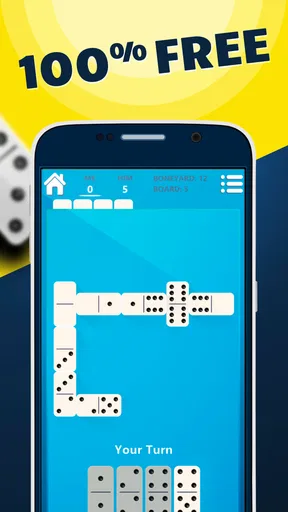

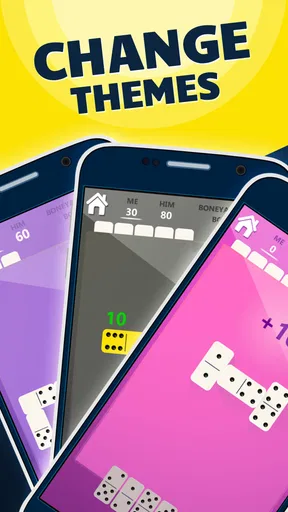
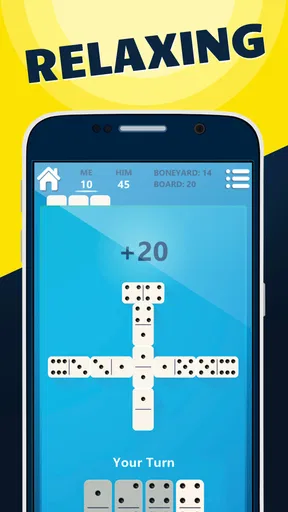

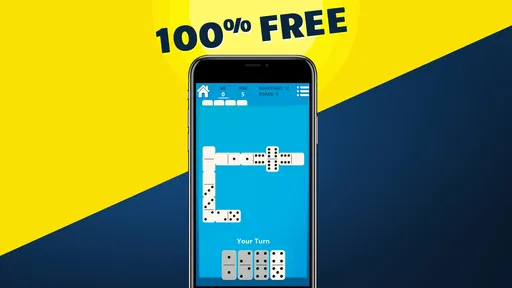
Our Review of Dominos Game Classic Dominoes
 Analysis by Appyee
I enjoy dominoes most when the rules are easy to understand but the decisions still reward attention. Dominos Game Classic Dominoes, developed by FIOGONIA LIMITED, fits that mood well. It is a board game for Android that lets me play familiar domino formats in online and offline sessions, making it useful both for a quick match and for a more relaxed game when I do not have a connection.
The basic appeal is straightforward: I draw tiles, look for legal matches, manage the pieces in my hand, and try to finish before the other side or control the round more effectively. That simplicity is exactly why this kind of game works on a phone. I do not need a long tutorial or a large time commitment, yet there is enough room to improve once I start remembering which numbers have already appeared.
It is free to install and suitable for Everyone. The game has built a strong audience, with a 4.7 average from around 56 thousand ratings and over 5 million installs. Those figures suggest that it has found a dependable place among casual board-game players, although popularity alone does not make every session perfect. My experience is that the real value comes from choosing the right mode and treating each round as a small exercise in probability rather than simply placing tiles as quickly as possible.
How I use the game from the first round to a repeatable routine
I begin by choosing offline play for a low-pressure first round, then settle on one format and focus on the open ends rather than rushing to place tiles. Once that feels comfortable, I use the same short check before each move—what choices does this leave me, and what might it leave the other player? That simple routine makes later online matches more useful practice, not just faster play.
A simple starting workflow that keeps the game comfortable
When I open Dominos Game Classic Dominoes, I approach it in three stages. First, I choose whether I want a connected match or an offline game. Online play is the natural option when I want another person involved, while offline play is more convenient during travel, in a waiting room, or anywhere I do not want to depend on a network. The important distinction is not just connection status; it changes the rhythm. A connected match feels more social and competitive, while an offline round is easier to pause mentally and use as practice.
Next, I select the style that matches my attention level. The game includes classic formats such as Block and Draw, along with more options. I prefer Block when I want a clean test of planning because a stuck position matters immediately. Draw is more forgiving when the board becomes difficult, since taking another tile gives the round a different kind of tension. I would not treat one as universally better. Block is better for short, focused sessions; Draw is often more comfortable when I am still getting used to counting possibilities.
Finally, I play the opening turns slowly. New players often spend too much effort searching for an immediate match and too little effort noticing what the opening reveals. I look at the numbers already exposed, identify which ends are active, and avoid using a flexible tile just because it is playable. That small habit makes the game feel less random. It also gives me a reliable routine that works in both online and offline play.
A realistic everyday use case is a short break between tasks. I can play one offline round without needing to prepare a complicated profile or learn a new ruleset. If I have more time later, I can switch to online play for a stronger challenge. This flexibility is one of the game’s best practical qualities, especially for people who want a board game rather than a large collection of unrelated features.
What the different formats change in practice
Block and Draw may look similar at first, but they encourage different habits. In Block, I try to preserve tiles that connect to several possible numbers and watch for signs that the other player is running out of choices. A move that looks ordinary can become powerful if it leaves an awkward number at the open end. Because drawing is not part of the same decision pattern, every tile I keep or discard has more weight.
In Draw, I am more willing to accept a temporarily weak position because another tile may reopen the round. That does not mean I play carelessly. I still try to avoid leaving an end that helps the opponent, but I focus more on keeping my hand balanced. If I hold too many tiles around one number, I can become dependent on a narrow sequence of matches. A broader hand gives me more ways to respond after drawing.
The game is also useful for learning the difference between a legal move and a good move. The interface makes placing a matching tile approachable, but it cannot make the strategic choice for me. I have to decide whether to reduce my hand quickly, protect a useful double, or control the number exposed at the end. That is where the experience becomes more interesting than a purely automatic puzzle.
Settings and small checks worth making before serious play
I recommend checking the available game options before settling into online matches. The most useful setting is not necessarily the one that changes the appearance; it is the choice of mode and the way the round is paced. I take a moment to confirm whether I am entering Block, Draw, or another available format, because switching between them without noticing can make a familiar strategy feel strangely ineffective.
I also pay attention to whether I am beginning an offline or online session. This sounds obvious, but it affects expectations. Offline play is the better choice when I want uninterrupted practice or a quick game with no concern about another player’s timing. Online play is the better choice when I want a more unpredictable opponent. If I am testing a new habit, I start offline first, then use online matches to see whether that habit survives pressure.
The game is free, but it contains in-app purchases ranging from $4.99 to $29.99 per item. That matters when deciding how to approach it. I can treat the free version as the main experience and avoid spending while I learn the rules. Anyone who dislikes optional purchases appearing in a free game should inspect the purchase flow and personal device settings before handing the phone to a child, even though the content rating is Everyone.
Another practical check is device compatibility. The current version is 2.8.1 and it requires Android 7.0 or later. That covers many older phones, but not every device still in use. I would check the Android version before recommending it to someone with an aging handset. On a compatible phone, the modest board-game format is easier to manage than a graphically demanding title, particularly for people who want a focused screen rather than a busy game world.
Shortcuts in thinking rather than shortcuts in the interface
I do not rely on imaginary automation or hidden controls to play better. The most effective shortcuts are repeatable mental checks. Before each move, I ask three quick questions: which numbers are currently open, which tile gives me the most future choices, and which move might remove the opponent’s easiest response? This takes only a few seconds once practiced, but it prevents the common mistake of choosing the first legal tile.
I also group my hand by number instead of looking at each tile as an isolated object. If I have several tiles connected to the same value, I consider whether that concentration is an advantage or a trap. It can help me continue a sequence, but it can also leave me stranded if that number disappears from the ends. This is especially important in Draw, where a hand that looks strong can still produce several unhelpful turns.
When I play online, I use the early turns to study the opponent’s choices rather than rushing to prove that I understand the rules. If a player repeatedly avoids exposing a certain number, I treat that as a clue, not a certainty. The clue becomes useful only when combined with the tiles already visible. Experienced play is less about guessing a hidden hand perfectly and more about reducing the number of comfortable options available to the other side.
A second useful habit is to remember doubles as structural pieces. A double may be easy to play at one moment and awkward at another, so I avoid releasing it automatically. Sometimes it is worth using early to prevent a blocked hand; sometimes keeping it gives me a way to respond when the board narrows. The right choice depends on the open ends and the remaining shape of my hand, not on a universal rule that every double should be played immediately.
Where the game rewards experience, and where it stops short
Dominos Game Classic Dominoes gives me enough room to practice decision-making, but it should not be mistaken for a deep competitive simulator with endless layers of customization. Its strength is the familiar board-game loop. Players who want a large campaign, elaborate progression, or a constantly changing collection of challenges may find the experience limited compared with broader strategy games.
The same focus can be a weakness for people who need extensive explanations. The rules are easy to recognize, but the game does not replace learning basic domino strategy. A newcomer may understand how to match a tile and still lose repeatedly because they ignore the numbers that have disappeared. I would recommend a few offline rounds before judging online play. That gives enough time to understand the pace and notice how Block differs from Draw.
Online matches also demand a different kind of patience from offline games. A human opponent can make unexpected choices, and the experience may feel less predictable than playing alone. That is a benefit if I want variety, but a drawback if I only want a calm, controlled pastime. For quiet practice, offline mode is the better alternative; for testing whether my habits work against a real person, online mode is more valuable.
Compared with a physical domino set, the app is more convenient and easier to use alone. I do not need a table, a second player standing nearby, or space to spread the tiles. The trade-off is tactile: I lose the feel of shuffling and placing real pieces. Compared with a generic solitaire-style board game, this title offers more direct interaction with an opponent and more meaningful attention to the open ends. Compared with a highly elaborate digital board-game platform, it is narrower, but that narrow focus makes it quicker to start.
One limitation I keep in mind is that repeated play can expose the boundaries of a simple format. Once I have learned the common patterns, some offline rounds may feel predictable. The solution is not to force the game into something it is not. I switch formats, raise the quality of my decision-making, or move online when I want uncertainty. If I need a long-term progression system, a different board game will probably suit me better.
How I turn ordinary rounds into useful practice
For improvement, I avoid judging a round only by whether I win. After a loss, I look back at the first moment when my hand became narrow. Often the mistake happened earlier, when I played a flexible tile without considering the number it exposed. This review habit is more useful than blaming an unlucky draw because it gives me something specific to change in the next game.
I also separate practice goals. In one session, I may focus on preserving options. In another, I may watch only for the opponent’s likely shortage. Trying to improve everything at once makes the board feel noisy. A single goal gives each move a clear purpose and helps me notice whether a strategy is actually working.
For a quick session, I choose the mode I already understand and make decisions promptly. For a learning session, I slow down and count the visible numbers more carefully. This distinction prevents a common frustration: expecting a relaxed game to deliver serious training, or expecting a practice round to feel effortless. The app supports both uses, but I get better results when I decide which one I want before starting.
Families can also use it as a gentle way to introduce dominoes on a phone. The Everyone rating makes it approachable, and the rules are recognizable enough for a child or beginner to understand with guidance. I would still supervise purchases and explain that winning is not only about placing a tile quickly. The best teaching moment is asking why a legal move was chosen and what it leaves for the next turn.
My final view after weighing convenience against depth
Dominos Game Classic Dominoes is at its best as a focused, flexible domino companion. I like that I can move between offline practice and online competition without abandoning the familiar board. Block and Draw provide enough variation to change my approach, while the straightforward format makes it easy to play during a short break or return to after a long gap.
The developer, FIOGONIA LIMITED, has kept the central experience recognizable rather than burying it under unnecessary systems. That is a strength for anyone who wants classic board play on a phone. The free entry also makes it easy to try before deciding whether the available purchase options are worth considering. I would not spend simply to compensate for weak strategy; the game becomes more enjoyable when I first learn to manage the hand I already have.
I recommend it to casual players, people returning to dominoes, and anyone who wants a compact game that works online and offline. I would be more cautious about recommending it to players seeking a deep campaign, extensive social tools, or a highly competitive ruleset with advanced customization. Those users may prefer a broader board-game app or a physical set with friends.
My practical recommendation is to begin with a few offline Draw rounds, then try Block once the matching rules feel natural. After that, use online play to test one habit at a time: preserve flexible tiles, watch the exposed numbers, and avoid giving the opponent an easy continuation. That progression makes the game more rewarding than simply tapping the first available move. For a free board game that has been available since May 29, 2017, it remains an easy title to pick up, with enough strategic texture to keep familiar rounds from becoming completely automatic.
Privacy and Permissions
See what permissions an app requests and how it handles your data.
- Photos/Media/Files
- read the contents of your USB storage
- Storage
- read the contents of your USB storage
- Wi-Fi connection information
- view Wi-Fi connections
- Other
- view network connections, full network access, control vibration, prevent device from sleeping, Google Play license check
Verdict
Strengths of Dominos Game Classic Dominoes
- Simple rules make it easy for beginners to start playing.
- Classic domino modes provide familiar, relaxing gameplay.
- Quick matches work well for short gaming sessions.
- Offline play is useful when you have no internet connection.
- Adjustable difficulty offers a challenge for different skill levels.
Limitations of Dominos Game Classic Dominoes
- Limited variety may make the gameplay feel repetitive over time.
- Ads can interrupt the experience, especially between matches.
- Higher difficulty levels may rely heavily on unpredictable draws.
- Some features or content may require in-app purchases.
- The interface may feel basic compared with newer board games.
Other Releases by FIOGONIA LIMITED
View All
Word Galaxy Challenge
Word4.7

Spades - Classic Card Game
Card4.7

Hearts - Card Game Classic
Card4.5

Yazy the yatzy dice game
Board4.7
Similar Picks in This Category
View All
Ludo King®
Gametion4.1

Ludo
Yarsa Games4.6

Tile Master® - Matching Game
Higgs Studio3.6

Checkers Online
CC Games4.6

Dominoes
Loop Games4.7

Chess
Chess Prince4.6
Frequently Asked Questions
What is Dominos Game Classic Dominoes?
Dominos Game Classic Dominoes is a digital version of the traditional dominoes board game for mobile devices. It lets you play familiar variations by matching tiles with the same number of dots and trying to place all your pieces before your opponent. The app is designed for casual play and is suitable for both beginners learning the rules and experienced dominoes players.
How do you play Dominos Game Classic Dominoes?
Gameplay generally begins with players receiving a set of domino tiles, while the remaining pieces stay in the draw pile. On each turn, you place a tile whose number matches one of the open ends on the table. If you cannot make a move, you draw or pass according to the selected rules. The winner is usually the first player to use all their tiles or achieve the required score.
Can I play Dominos Game Classic Dominoes offline?
The game is mainly suitable for local, offline-style play against computer-controlled opponents, making it convenient when you do not have an internet connection. Offline availability can depend on the specific version and device, so it is worth checking the game description and permissions before downloading. If online multiplayer is offered, an internet connection may be required for those matches.
Does Dominos Game Classic Dominoes include different game modes or difficulty levels?
Classic dominoes apps commonly provide several rule variations, such as Draw Dominoes, Block Dominoes, or All Fives, along with selectable opponents or difficulty settings. These options can make the experience more accessible for new players while giving experienced users a greater challenge. Available modes may differ between Android and iOS releases, so review the current store listing for exact details.
Is Dominos Game Classic Dominoes free to download, and does it contain ads or in-app purchases?
Dominos Game Classic Dominoes may be available as a free download, but free versions of mobile board games often include advertising, optional purchases, or both. Ads can appear between rounds or within menus, while purchases may offer an ad-free experience or additional features. Before installing, check the Google Play or App Store listing for the current pricing, advertising information, and in-app purchase details.
Play our best games!


